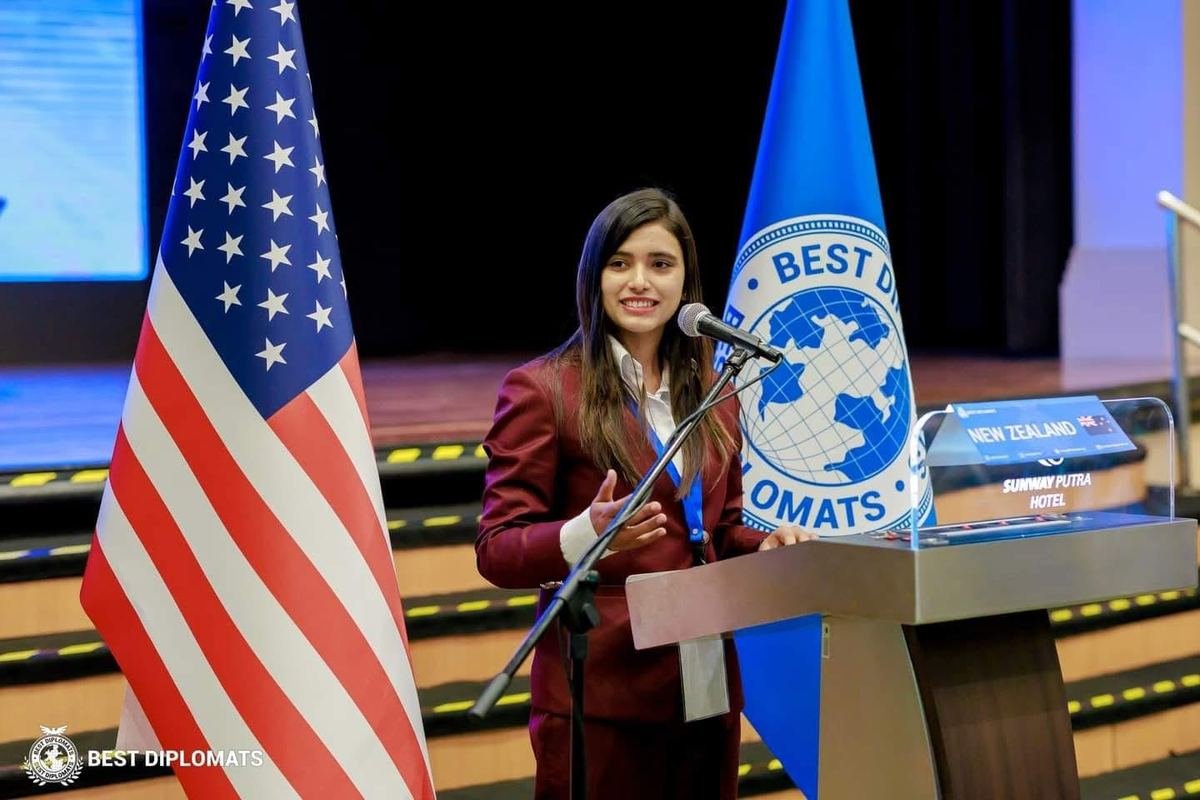
Let us start with the truth that most MUN brochures will not tell you: a single Model UN conference does not transform a student. Not the first one, not even the second. What transforms a student is a two-to-three year arc — a slow, often unflattering progression from confused first-timer to someone who can stand at a podium and hold a 50-person committee's attention without flinching. This post traces what that arc actually looks like for a Pakistani delegate, stage by stage, with the time investments, the awards, the plateaus, and the moments where most students either commit or quietly drop out.
If you are a parent reading this, the goal is to give you a realistic mental model — so that when your child says "I have a conference next month," you have a sense of where they are on the curve and what the next two years should reasonably produce. If you are a student, the goal is to set expectations honestly: most of the gains in MUN are invisible until they suddenly are not, usually around your fourth or fifth conference.
Stage 1: The curious first-timer
This stage typically begins in Year 9 or Year 10, usually because a friend signed up first or a school MUN club came calling. The first conference is almost always a domestic one — a school MUN, an inter-school event like the Beaconhouse Inter-School MUN, or a smaller Pakistani circuit conference such as LSEMUN, KGS MUN, or LACAS MUN. These are the right places to start. Anyone who tells a 14-year-old to begin with Harvard or Oxford international MUN has either forgotten what 14 felt like or has not paid attention to how delegates actually develop.
What this stage looks like in practice is wide-eyed and quiet. The student spends most of committee listening, trying to figure out the difference between a moderated and an unmoderated caucus, occasionally raising a placard, and possibly delivering one nervous speech in the General Speakers List that they will replay in their head for two weeks. The position paper, attempted for the first time, is usually a Wikipedia compression of the country's foreign policy. None of this is a problem. It is the point.
Common Stage 1 awards: usually none. Sometimes a Verbal Mention if the chairs are generous. This is the correct outcome. A first-timer who walks away with a Best Delegate trophy has either lucked into a weak committee or — more commonly — been over-coached by an older sibling. Neither is sustainable. The valuable output of Stage 1 is the realisation, sometime on the second day, that "I can stand up in a room full of strangers and speak about real issues without dying." That sentence, internalised, is worth more than any plaque.
Time investment: roughly 20 hours of preparation (research, position paper, one mock speech with a senior or coach) plus a two-day conference. Total cost-of-attention: a single weekend, plus three or four evenings.
Stage 2: The local regular
By Year 10 or early Year 11, the curious first-timer either fades out of MUN or settles into a rhythm of three to five Pakistani conferences across an academic year. This is the local regular stage and it is where most of the technical foundation gets built.
What changes here: the format becomes second nature. The student stops thinking about Roberts' Rules and starts thinking about strategy. They begin to notice that some delegates dominate by speaking loudest and others by writing the working paper that everyone ends up signing. They start to figure out which of the two they are, and which they want to become. The first Honourable Mentions appear. Best Position Paper recognition is genuinely earned because the research has actually been done — Foreign Affairs read, the Crisis Group briefings skimmed, the relevant Security Council resolutions traced.
Specialisation also begins. Some delegates discover they thrive in fast crisis committees, where directives fly and you live or die by your ability to think under pressure. Others find themselves drawn to General Assembly committees where the rhythm is slower and the prize goes to whoever drafts the cleanest resolution. Still others gravitate toward ECOSOC bodies — UNDP, UNESCO, WHO — where the substance is technical and the negotiation is policy-heavy. None of these is better than the others. Knowing which one fits you is itself an output of Stage 2.
A small network forms in this stage too. Other Pakistani delegates from Karachi Grammar, LGS, Aitchison, Roots, and the larger Beaconhouse and City School branches start becoming familiar faces at conferences. By the third or fourth event, a delegate recognises a third of the room. This network matters more than most parents realise — these are the same students who will end up at LUMS, FAST, Habib, and overseas universities, and the connections seeded in committee rooms persist.
Time investment: roughly 50 hours of cumulative MUN engagement across the academic year. Family awareness shifts here. A parent who treated the first conference as a one-off begins to understand that this is becoming a serious extracurricular commitment, not a hobby.
Stage 3: The first international delegation
This is the stage where everything gets harder. A delegate who has done four or five Pakistani conferences and won a couple of Honourable Mentions feels — reasonably — that they are good. The first international conference disabuses them of that impression within about ninety minutes of opening committee.
The first international is typically Best Diplomats Dubai, NMUN in New York or Washington, or Cambridge International MUN. Some delegates begin with regional events in Malaysia, Thailand, or Singapore. The shift is jarring. Committees are bigger — 50 to 80 delegates rather than 20 to 30. The preparation expectations are deeper; chairs at international conferences have read hundreds of position papers and can spot a thin one in fifteen seconds. The judging panels are more experienced and harder to impress. And — for many Pakistani delegates — this is the first time they speak in committee against students from countries with much longer competitive MUN traditions, including Indian delegates from NLSIU and NLU, American delegates from established East Coast prep schools, and European delegates who have been doing THIMUN since they were twelve.
If you have not read it yet, our guide on how to prepare for your first international MUN is essentially built around managing this Stage 3 transition.
Common first-international outcome: an Honourable Mention or Outstanding Delegate, sometimes nothing but the experience itself. The delegates who come back with Best Delegate at their first international are statistical outliers. The honest, valuable outcome is the realisation: "I am playing in a wider world now, and the level above me is real." That recognition, properly absorbed, is what powers the next six months of preparation.
Time investment: 80 to 120 hours over the two to three months before the trip, including travel, jet lag, and post-conference debrief. Add the visa application timeline, which is itself a lesson in patience and bureaucratic stamina that no school subject teaches.
Stage 4: The specialist
Year 12 or first year of university. The delegate now has two or three international conferences across their record and is starting to look like someone whose name committee chairs remember. They have stopped chasing every conference invitation and started picking carefully — events that match their committee strengths and where the competition will sharpen them.
Awards become more pointed. The delegate is no longer happy with Honourable Mention. They are pursuing Best Delegate, or specific niche awards — Best Diplomacy, Best Position Paper, Outstanding Delegate. Their position papers are now genuinely good — comparable to the top 10% in any committee — because they have written enough of them that the structure is automatic and the substance is where their attention lives.
Two new things tend to appear in Stage 4. First, mentorship. The delegate begins informally coaching newer delegates from their school or city — running mock committees, marking position papers, sitting in on practice speeches. Some do this through their school's MUN society; some do it because younger students simply ask them. This is a meaningful development. Teaching MUN to someone else surfaces gaps in your own understanding faster than any amount of additional conferences will.
Second, the first chair or vice-chair role. Usually at a Pakistani conference, often at the very school MUN where the delegate started. Sitting on the dais — running the speakers' list, ruling on points of order, judging speeches rather than giving them — is the first taste of what Stage 5 is.
Stage 5: The chair / secretariat
By university — typically second year onwards — the strongest MUN-formed students move beyond delegate work entirely. They join secretariats, organise committees, train others, and chair sessions both nationally and internationally. A serious Stage 5 student might serve as a Director, Vice-President, or Under-Secretary-General at a Pakistani university MUN such as LUMUN, IBA MUN, NUST MUN, or FAST MUN. Some are invited back to the international conferences they once attended as delegates — Best Diplomats, in particular, has a track of returning standout delegates as chairs in subsequent editions.
What makes Stage 5 different from earlier stages is that MUN training stops being practice and becomes professional preparation. Running a 60-person committee for three days demands real executive function. Mediating between two strong delegates whose blocs have collided demands real diplomatic judgment. Writing the executive summary that the Secretary-General will read in closing ceremonies demands real public communication of authority. These are not skills you simulate. They are the skills.
This is also the stage where MUN starts paying back into the rest of a student's life — into university tutorials, debating, internships, and eventually into law school, policy school, journalism, or whatever path the student chooses. We have written separately about why college admissions officers value international conference experience, but the deeper truth is that admissions are the small payoff. The bigger payoff is that a Stage 5 MUN graduate has done five years of practice at exactly the cluster of skills that adult professional life rewards: speaking under pressure, writing under deadline, managing other strong people, and surviving rooms where the rules are negotiated as you go.
What the progression actually requires
Three or four habits separate the delegates who get to Stage 5 from the much larger group that plateaus around Stage 3.
- Consistency over intensity. One conference per quarter, sustained across two years, beats four conferences crammed into a single month. The recovery and review time between events is where the actual learning consolidates.
- A daily current-affairs habit. Dawn, Al Jazeera, the Foreign Affairs print edition (or the website), The Diplomat for Asia coverage, and at least one good newsletter on whatever region the next committee will cover. Twenty minutes a day, every day. Skipped weeks are visible in committee.
- Structured post-conference review. After each conference, the delegate sits down — ideally with a mentor or coach — and goes through what worked, what fell flat, which speeches landed, where their bloc strategy failed, and what to study next. Without this step, conferences become repetitive rather than cumulative.
- Conference selection over conference quantity. Not every prestige conference is the right one for a given delegate at a given moment. A Stage 2 delegate who stretches to Harvard WorldMUN will likely come back demoralised. A Stage 4 delegate who keeps doing entry-level circuit conferences is wasting their own development time.
- A mentor. Usually a chair the delegate respected at some earlier conference, sometimes a senior at school, sometimes a coach. Someone who will read drafts, watch practice speeches, and give feedback that is more honest than encouraging. Most delegates find this person between Stage 2 and Stage 3.
The plateau problem
Most Pakistani delegates who quit MUN do so somewhere in late Stage 3. The pattern is consistent enough to describe: the student has done a few local conferences, won an Honourable Mention or two, attended one international conference where they were outclassed, and now finds that the gap between their current level and the next one is wider than the gap between Stage 1 and Stage 2 was. They put in the same effort and stop seeing the same returns.
The cause is usually one of two things. The first is a research gap — the delegate has been winging position papers on the strength of general knowledge and now faces committees where genuine subject-matter depth is the entry ticket. The fix is not more conferences; it is a quarter spent reading deeply on one issue area until they could write a credible briefing memo on it.
The second is a writing gap. Speaking in committee is half the battle. The other half — writing working papers, draft resolutions, friendly amendments — is where Stage 4 and Stage 5 delegates pull away. A delegate whose speaking is solid but whose drafting is mediocre will keep getting Outstanding Delegate and never quite Best Delegate. The fix is to write more and to read other people's working papers — past resolutions from real UN sessions, not just MUN samples.
What chairing teaches that delegating doesn't
Becoming a chair is not just an administrative promotion. It develops a different cluster of skills:
- Judgment under pressure. Ruling on a contested point of order with 50 delegates watching, in real time, with no take-backs.
- Public communication of authority. Speaking in a way that the room treats as final, without raising your voice or being theatrical about it. Most delegates have never practised this until they chair.
- Conflict mediation. Two delegates whose blocs are on a collision course, and you have to find the language that lets both sides claim a partial win.
- Executive function. Three days of running a schedule, managing a dais team, marking papers, judging awards, and not losing the thread of any of it.
Two short delegate arcs
Both of the profiles below are composites — anonymised and recombined from PIFIS delegate trajectories over the last few years. They are not specific individuals; they are typical paths.
Hina, the long arc. Started at her school's MUN club in Year 9 as a quiet listener at Beaconhouse Inter-School MUN, where she did not speak until the second day. By Year 10, three local conferences in. By Year 11, an Honourable Mention at LUMUN and a first international trip — Best Diplomats Dubai, where she came back with Outstanding Delegate and a notebook full of notes on how the top delegates wrote. Year 12: Best Delegate at NMUN, two more circuit appearances, and an early acceptance offer. By her second year at university she was on the Secretariat of LUMUN. The whole arc took four academic years. There is no shortcut version of Hina's story.
Adnan, the late starter. Picked up MUN late in Year 11 — too late, by conventional logic, to build a real record. Made the deliberate choice to skip volume and go deep. Three Best Diplomats trips across eighteen months, two Best Delegate awards, one Best Position Paper. No domestic circuit padding. Now reading PPE at a top UK university and chairing at a Pakistani conference each summer when he is back in Lahore. Adnan's story works because he understood what most rushed late-starters do not — that depth on a small number of well-chosen conferences beats volume on a long list.
What PIFIS does at each stage
| Stage | What PIFIS provides |
|---|---|
| Stage 1 — Curious first-timer | Introductions to MUN through partner schools, entry-level workshops on parliamentary procedure, and orientation sessions for parents. |
| Stage 2 — Local regular | Vetted local circuit recommendations, position-paper clinics, mock committees, and 1-on-1 review of speeches and drafts. |
| Stage 3 — First international | Full delegation handling — registration, visa documentation, flights, accommodation, halal and prayer arrangements, on-site coaching, and pre-departure briefings. |
| Stage 4 — Specialist | Curated international conference selection, advanced research support, mentorship pairings, and award-track preparation. |
| Stage 5 — Chair / secretariat | Chair-track placements at PIFIS-affiliated conferences, references for international chairing applications, and alumni network access. |
If you are a parent or student earlier in this journey and want to understand the foundation first, our complete guide to Model UN for Pakistani students walks through the format, the committees, and the basic vocabulary in more detail.
Frequently asked questions
Is it too late to start MUN in Year 11?
No. Year 11 is a perfectly reasonable starting point if the student is willing to compress what others do across two years into about twelve months. A focused Year 11 starter can attend two local conferences, one international conference, and produce a respectable application profile by the time university applications go out. The students who struggle starting at Year 11 are not the late starters — they are the ones who treat MUN as a single trophy-hunt rather than a sustained learning curve.
Can a student skip local MUNs and go straight to international?
Technically yes, practically no. International conferences such as Best Diplomats or NMUN do not require prior MUN experience to register, but the gap in committee fluency is brutal at that level. A delegate with zero local circuit experience usually spends the first day mostly silent while peers run unmoderated caucuses around them. Two or three Pakistani conferences before an international debut is the difference between observing and participating.
How many international conferences does a competitive delegate need?
For college admissions purposes, two to three international conferences across Year 11 and Year 12 are sufficient to establish a credible record. More than that risks looking like conference tourism rather than genuine engagement. Admissions officers value depth — a Best Delegate at Best Diplomats Dubai plus a thoughtful chairing role beats five mid-tier participations with no awards.
What's the realistic time commitment for serious MUN involvement?
Roughly 4-6 hours per week of background reading and writing during active terms, climbing to 15-20 hours per week in the three weeks before a conference. A serious delegate puts in around 200-300 hours per academic year across all preparation, attendance, and review. That's substantial but compatible with A-Level coursework if planned around exam terms.
Does chairing matter more than delegating for college applications?
Not more — differently. Strong delegate awards demonstrate competitive performance under judgment. A chairing role demonstrates leadership, organisation, and the ability to manage other strong students. The strongest applications usually show both: two or three clear Best Delegate or Outstanding Delegate awards, plus at least one chairing or secretariat position. Chairing without a substantive delegate record can read as administrative experience rather than diplomatic skill.
Wherever you are in the arc, we can help.
Whether your child is preparing for their first school MUN or applying for an international chair role, talk to PIFIS about the right next step — including Youth Impacts 2026.
Get in touch