Pakistani families deserve a clear answer to a simple question: how much does an international Model UN trip actually cost? The marketing pages of conference organisers rarely give a complete picture. They quote a registration fee, mention "accommodation available," and leave the rest — flights, visas, meals, attire, insurance — for the family to discover line by line, often a week before the deposit is due.
This post is the answer we wish existed when our first cohort travelled in 2018. Approximate 2026 prices, in both PKR and USD, for every line item that goes into a five-day international MUN. Realistic total ranges by destination. The funding routes Pakistani families actually use. And an honest take on what is worth saving on and what is not.
None of these numbers are fixed. Currency moves, airfares spike around Eid and summer, and conferences adjust their fees year to year. Treat every figure as a defensible approximation, not a quotation.
What goes into the bill
An international MUN trip from Pakistan has roughly nine cost lines. Skip any of them in your planning and you will be surprised on the back end.
1. Conference registration fee
This is the headline number, and it varies more than people expect.
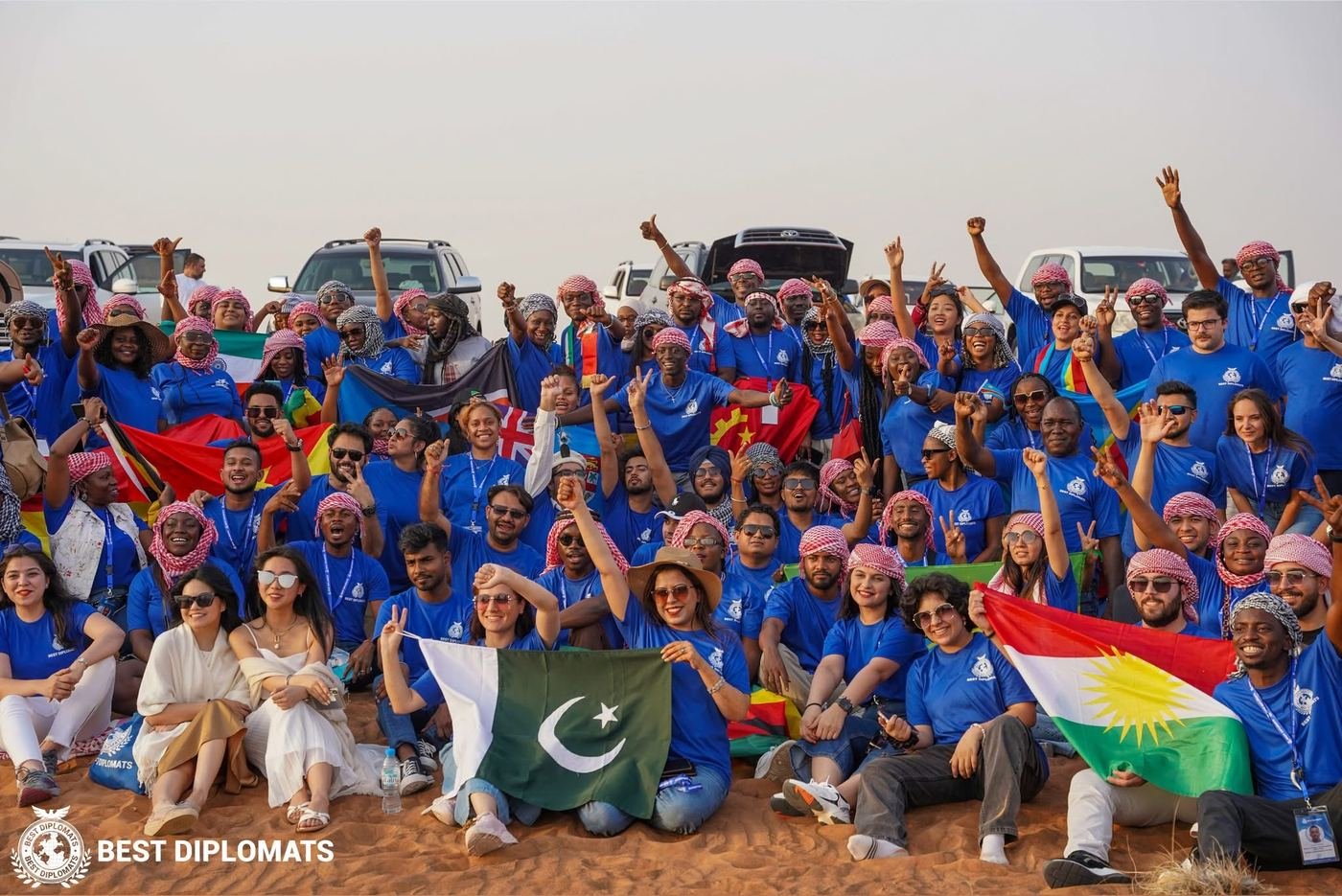
- Best Diplomats (Dubai, Istanbul, Bangkok, Kuala Lumpur, New York editions): approximately USD 400-700 per delegate. Critically, most Best Diplomats packages bundle four to five nights of hotel accommodation, conference meals, and city excursions into this fee. The headline number looks high until you realise it is also paying for your room.
- NMUN and other academic university conferences: approximately USD 150-300 per delegate. Lean fee, but covers the conference only — accommodation, food, and transport are entirely on you.
- Harvard Model United Nations (HMUN): approximately USD 200-400 per delegate, with the same rule as NMUN — accommodation in Boston is separate, and Boston in winter is not cheap.
- Local-feeder international MUNs hosted by universities in Dubai, Istanbul, or Bangkok: approximately USD 150-350. Quality varies, so check the conference's history.
2. International flights
The largest single cost for most families, and the one most volatile to your booking date. Approximate 2026 round-trip economy fares from major Pakistani cities (Karachi, Lahore, Islamabad), booked four to eight weeks ahead, in low-to-mid season:
| Destination | Approximate return fare (PKR) | Approximate (USD) |
|---|---|---|
| Dubai (DXB) | 80,000 – 150,000 | 290 – 540 |
| Kuala Lumpur (KUL) | 110,000 – 180,000 | 395 – 645 |
| Bangkok (BKK) | 130,000 – 200,000 | 465 – 715 |
| Istanbul (IST) | 170,000 – 260,000 | 610 – 930 |
| London (LHR) | 280,000 – 400,000 | 1,000 – 1,430 |
| New York (JFK) | 350,000 – 500,000 | 1,250 – 1,790 |
Two practical notes. First, group bookings of fifteen or more delegates can typically negotiate 10-15 percent off published fares with PIA, Emirates, or Qatar Airways — one of the quiet reasons packaged delegations come in cheaper than DIY. Second, peak summer (June-August) and Eid windows can push these numbers up by 30-50 percent. Plan around them if you can.
3. Visa fees
Pakistan-passport visa costs and processing realities, very approximate:
- UAE: approximately AED 320 (around PKR 25,000) for a 30-day tourist visa. Processed in 3-7 working days. Easiest of the lot.
- Malaysia: visa-free for stays under 30 days for Pakistani passport holders as of late 2025 (verify before booking — these policies move).
- Thailand: e-visa or visa-on-arrival, approximately THB 2,000 (around PKR 17,000).
- Turkey: e-visa for around USD 60 (PKR 17,000) when eligible; otherwise a sticker visa via the consulate.
- UK Standard Visitor visa: approximately GBP 115 (around PKR 38,000), plus mandatory biometric appointment. Three to six weeks processing — start early.
- US B-1/B-2 visa: approximately USD 185 (around PKR 55,000) at the consular fee window. Interview wait times in Islamabad and Karachi have run anywhere from a few weeks to several months — this is the single biggest scheduling risk for any US-bound MUN.
For deeper detail on the visa process itself, our visa guide for Pakistani students attending MUN conferences walks through documentation, sponsorship letters, and timelines.
4. Accommodation
If the conference includes accommodation in its package, this line is already paid. If not, budget for it.
- Conference hotel block (when offered separately): USD 80-150 per delegate per night, twin-share. Five nights = USD 400-750 per delegate.
- Independent mid-range hotel: USD 80-150 per night in Dubai, Bangkok, Kuala Lumpur, or Istanbul. Boston, New York, and London run USD 180-350 per night.
- Apartment / Airbnb shared between four delegates: typically reduces per-head cost by 30-50 percent versus a hotel, but requires adult chaperoning that families and schools should agree on in advance.
5. Meals
Approximately USD 25-50 per day, depending on city. Conference packages often cover one or two meals a day during conference hours; the rest is on you. Halal food is straightforward to find in Dubai, Istanbul, Kuala Lumpur, and Bangkok. In London, New York, and Boston, plan ahead — there are options, but they require effort. Five days of meals = roughly USD 125-250.
6. Local transport, sim, miscellaneous
Airport transfers, metro and ride-hailing during the trip, a local SIM or eSIM, water, snacks, laundry, charger adapters: approximately USD 100-200 across the trip.
7. Travel insurance
Approximately PKR 5,000-15,000 for a 7-10 day policy. Often required as part of a Schengen, UK, or US visa application. Never optional in practice — a single emergency room visit in any of these countries costs more than the entire trip.
8. Formal Western business attire
If the delegate doesn't already own a navy or charcoal suit, a white shirt, leather shoes, and a conservative tie (or for female delegates, a tailored blazer, formal trousers or a long skirt, modest formal blouse, and closed-toe shoes), budget approximately PKR 15,000-50,000 to assemble it. This is a one-time cost that pays off across multiple conferences and university interviews. Buy from local tailors in Lahore or Karachi rather than imported retail — better fit, half the price.
9. Position-paper and prep materials
Negligible if self-prepared. PIFIS and similar organisers include coaching in their packages; outside that, expect to spend zero on materials beyond a notebook and a printer.
Realistic total ranges by destination
Pulling all the above together for a five-day international MUN, including round-trip flights, visa, conference fee, accommodation, meals, transport, insurance, and a moderate clothing line. These are approximate all-in totals per delegate.
| Destination / conference type | Approximate all-in cost (PKR) | Approximate (USD) |
|---|---|---|
| Dubai — Best Diplomats (package included) | 350,000 – 550,000 | 1,250 – 1,970 |
| Kuala Lumpur or Bangkok — Best Diplomats / regional | 450,000 – 700,000 | 1,610 – 2,500 |
| Istanbul — Best Diplomats / regional | 600,000 – 850,000 | 2,140 – 3,040 |
| London — university or NGO conference | 850,000 – 1,300,000 | 3,040 – 4,640 |
| New York or Boston — HMUN / NMUN | 1,000,000 – 1,600,000 | 3,570 – 5,710 |
The ranges look wide because they are. A delegate who books flights two months ahead, shares a hotel room with three others, and packs sandwiches lands at the bottom of each band. A delegate who books two weeks out, opts for a single room, and orders room service lands at the top.
Why packaged delegations often cost less than DIY
It seems counterintuitive. Why would paying a Pakistani organiser like PIFIS to coordinate a delegation be cheaper than the family doing it themselves?
- Group flight discounts: airlines offer 10-15 percent off published fares for confirmed bookings of 15+ passengers. A family of one cannot access this.
- Group hotel rates: hotels release a "block" of rooms to delegations at typically 15-25 percent below published rates, plus complimentary chaperone rooms.
- Shared visa support: a single coordinator drafting sponsorship and invitation letters for 30 delegates costs the family far less than hiring an immigration consultant individually.
- No solo chaperone cost: a single family travelling with a fourteen-year-old needs a guardian flight, hotel room, and meal budget too. In a group delegation, that cost is amortised across every delegate.
- Bulk conference registration: many conferences offer a small discount for delegations of 10+, which packaged organisers pass on (or bundle into the package value).
This is why a good packaged delegation typically lands within 10-20 percent of the DIY cost — and once the delegate's coaching, chaperoning, and on-ground logistics are added in, often below what the same trip would cost a family doing it alone.
What's typically included vs. extra in a conference package
Whether you go through PIFIS, another delegation organiser, or directly to the conference, read the inclusions carefully. Typical packaged delegation:
- Included: round-trip group flights, four to five nights' twin-share accommodation, conference registration, conference-hour meals, airport transfers, on-ground chaperoning, position-paper coaching, visa documentation support, one or two cultural excursions.
- Extra (not included): visa fee itself, evening meals outside conference hours, personal shopping, optional extra excursions, single-occupancy hotel upgrade, travel insurance (sometimes), formal attire.
Conference-direct registration without an organiser usually only includes registration and conference-hour meals. Everything else — flights, hotel, transport, support — is the family's problem.
Funding options Pakistani families actually use
Few Pakistani families write a single cheque for a million rupees. Most assemble the budget from three or four sources.
Family savings
Still the most common route. The trip is treated as an educational expense alongside O-Level, A-Level, and SAT preparation costs. Families who plan a year ahead generally manage one to two international conferences across a student's secondary school years without strain.
School sponsorship
A meaningful number of Pakistani schools partially sponsor MUN delegates — typically the registration fee, sometimes flights as well, especially if the delegate is representing the school in a recognised conference. Beaconhouse, City School, LGS, Aitchison, Karachi Grammar, and a handful of independent schools have all run partial sponsorship arrangements at various points. Approach the principal's office formally, in writing, with the conference's official letter and a clear value proposition: the school's name on the delegate's published position paper, a debrief assembly, and a signed certificate of participation displayed in the school.
Corporate sponsorship
Local Pakistani banks, telecoms, and consumer brands occasionally sponsor youth diplomacy delegates — usually one or two students from a particular school, often through a CSR or "future leaders" programme. The success rate on cold approaches is low, but the success rate on alumni-network introductions (a parent's employer, a relative on a CSR committee) is materially higher. Ask the school's careers office whether they have any standing relationships before you write a generic letter.
Conference scholarship spots
Some academic conferences, including NMUN and a small number of university-hosted MUNs, run limited need-based fee reductions for delegates from developing countries. They are competitive, application-based, and rarely cover the full trip — but a USD 200-300 reduction on registration is real money.
Crowdfunding within extended family
Culturally common in Pakistan and worth treating as a legitimate option, not a last resort. A grandparent, an uncle abroad, or a working older sibling each contributing PKR 50,000-100,000 can move a family from "we can't" to "we can." Frame the contribution as an investment in the delegate's education, not a gift, and follow up with a written report and photos after the trip — it makes the next ask easier.
Delegate-led fundraising
Selling small fundraising packages — a soft tea event for relatives, a sponsored bake sale, a printable thank-you card with the delegate's photo and a note from the conference — works well in Pakistani family contexts and teaches a useful skill. Schools sometimes allow a fundraising stall during a school event with a clear, conference-specific purpose.
The "parent-as-investment" framing
For families weighing whether the cost is justified, the honest framing is this: a single international MUN does not, by itself, get a student into Stanford. But it materially strengthens a Pakistani applicant's profile in three measurable ways — a substantive activity essay topic, a recommender (the school's MUN coordinator or the conference's faculty advisor) with international context, and a demonstrable record of operating outside their immediate environment. Whether that is worth PKR 500,000 depends on the family's overall admissions plan. We've covered the fuller picture in our guide to what Model UN actually is for Pakistani students and parents.
The hidden costs people forget
Honest list of the line items that catch families out in the final week:
- Excess luggage fees — formal attire, gifts, and the inevitable shopping push most delegates over the 23kg economy allowance. Budget USD 30-80 each way.
- Last-minute hotel changes — flight delays or visa issues sometimes force an unplanned night. Keep PKR 30,000-50,000 in reserve.
- Cultural-night attire — many international MUNs run a "cultural night" where delegates wear traditional dress. A proper sherwani, kurta, or formal shalwar kameez, if not already owned, is PKR 8,000-25,000.
- Gift items for delegate exchanges — small Pakistani souvenirs (truck-art keychains, ajrak scarves) to exchange with delegates from other countries. Budget PKR 5,000-15,000.
- Cash for incidentals — international card payments fail more often than expected. Carry USD 100-200 in small denominations.
- SIM and roaming — local eSIM cards (Airalo, Holafly) cost USD 10-20 for the trip; international roaming on a Pakistani number can cost ten times that.
What's worth saving on, what isn't
If the budget is genuinely tight, here is where to cut and where not to.
Worth saving on
- Flight class: economy is fine. The 9-hour flight is not the experience; the conference is.
- Hotel comfort: a triple-share with two other delegates teaches the same thing a single room teaches and costs a third as much.
- Optional excursions: a desert safari or a Bosphorus cruise is delightful but not load-bearing. Skip if you must.
- Imported attire: a well-tailored Pakistani-stitched suit looks identical to an imported one in a committee photograph.
Never compromise on
- Conference quality: a cheap, badly run "international" MUN with thirty unverified delegates from one school looks worse on a university application than no MUN at all. Pick a conference with a documented history and verifiable judges.
- Travel insurance: this is non-negotiable. The cost is trivial against the downside.
- Chaperoning for under-18 delegates: never send a 15-year-old to Bangkok or Istanbul on their own to "save the chaperone fee." Our parent's guide to international student travel covers this in detail.
- Visa documentation quality: a rushed application is a refused application, and a refusal stays on the file. Do this properly.
A realistic parent-student conversation when budget is tight
If a student wants to attend HMUN Boston and the family can comfortably manage PKR 500,000, not 1.5 million, the conversation does not need to end in disappointment. A few honest options:
- Attend Best Diplomats Dubai or a Kuala Lumpur conference this year for around PKR 400,000-550,000. Build the credential, the position-paper portfolio, and the references.
- Use the year between Form 4 and Form 5 (or O-Level and A-Level) to apply for a school sponsorship and a corporate CSR slot for the bigger conference the following year.
- Plan the Boston trip 12-18 months ahead, book flights at the lower end of the range, and combine with a partial sponsorship.
- Choose one high-quality international conference per academic year rather than two mid-quality ones. The credential matters more than the number.
The trip your family can comfortably afford this year is almost always the right trip. A delegate who attends one well-run regional MUN with full focus, takes notes, writes a follow-up essay, and uses it to anchor an admissions application is in a better position than one who attended two trips the family had to scramble to pay for.
Frequently asked questions
Why is Best Diplomats Dubai so much cheaper than HMUN Boston?
Three reasons. Flights from Pakistan to Dubai are roughly a fifth of the price of flights to Boston. The UAE visa is processed in days for around PKR 25,000, while the US B-1/B-2 costs USD 185 plus weeks of waiting. And Best Diplomats packages typically bundle five nights of hotel accommodation into the conference fee, while HMUN charges a registration fee of approximately USD 200-400 per delegate but expects you to arrange your own Boston hotel, which alone can cost USD 200-300 per night.
Are scholarships available for Pakistani MUN delegates?
A small number. Some academic conferences such as NMUN run limited need-based fee reductions for delegates from developing countries, and individual schools occasionally cover registration for top selected students. Full scholarships covering flights and accommodation are rare. Most Pakistani families fund the trip through a combination of family savings, partial school sponsorship, and packaged-delegation discounts.
Can a Pakistani student attend an international MUN without their school's support?
Yes. Independent delegates apply directly to the conference or join a packaged delegation run by an organisation like PIFIS. The school's involvement helps with reference letters and sometimes funding, but it is not technically required. Many conferences accept individual applications, and packaged delegations exist precisely so a strong student from a school with no MUN tradition can still go.
Is it worth taking a loan for one MUN conference?
For most families, no. A conference is a single experience, not a degree, and the value should match what the family can comfortably absorb. If the only path is a high-interest loan, a more affordable conference closer to home, such as Dubai or Kuala Lumpur, is the better starting point. Save the larger trips for cases where the student has already proven engagement at a local or regional MUN.
What is a fair price to pay PIFIS or any organiser for handling an international MUN trip?
A reasonable packaged delegation should land within roughly 10-20 percent of the cost of doing the same trip yourself, and that premium should buy real services: group flights, vetted hotel block, visa documentation support, chaperone supervision, position-paper coaching, and on-ground logistics. If a quoted package is more than 30 percent above the DIY cost without those inclusions, ask exactly what is being delivered.
Want a transparent, itemised quote?
Talk to PIFIS about Youth Impacts 2026 or any of our 2026-27 international delegations — we send the cost breakdown in writing, line by line.
Get in touch