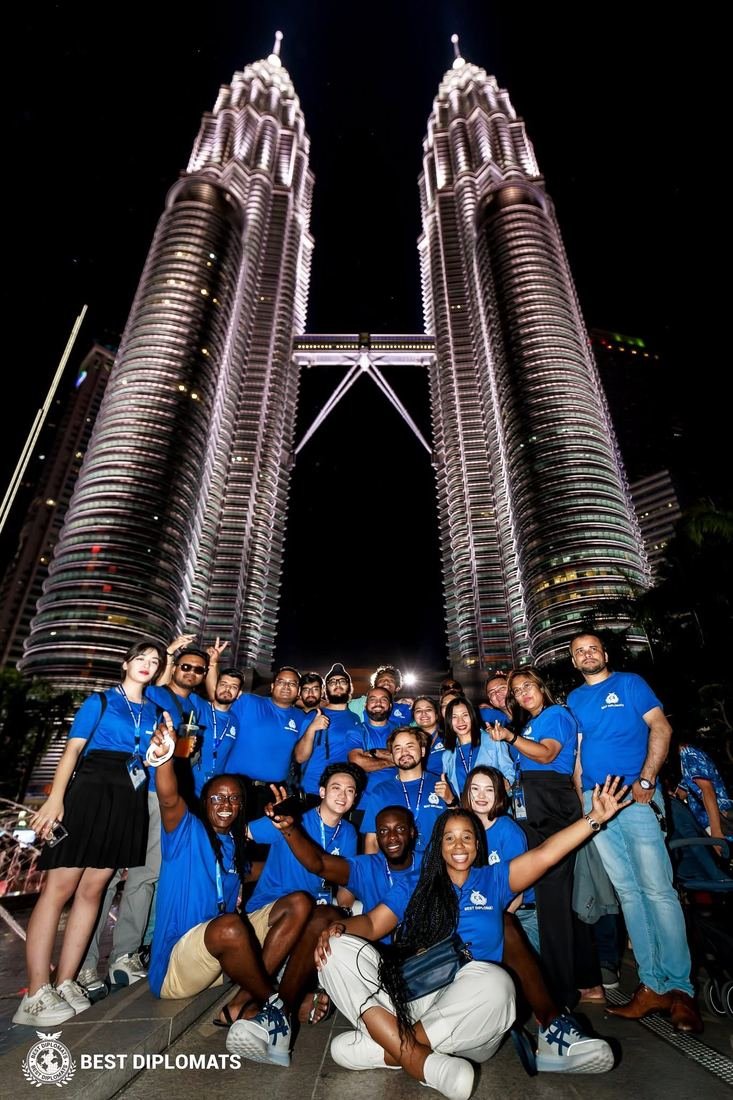
Every year at PIFIS, we field the same panicked email from a parent or a student around six weeks before a conference. The application is paid for, the school has approved the leave, the position paper is half-drafted — and now they have realised that getting the actual visa is its own project. Sometimes a much harder one than getting into the conference.
Visas are, by a wide margin, the single biggest reason a Pakistani student misses an international Model UN. Not money. Not academics. Not parental approval. The visa.
The good news: with the right preparation, the right paperwork, and a realistic timeline, the visa is solvable. Genuine student delegations from established Pakistani schools — Beaconhouse, Lahore Grammar, Aitchison, Karachi Grammar, City School, LACAS, and the rest — get approved at high rates every year. The students who get refused are almost always the ones who treated the visa as an afterthought.
This guide walks through the four destinations Pakistani MUN students travel to most often: the United States, the United Kingdom, the United Arab Emirates, and Malaysia. For each, we cover the visa category, the documents you actually need, processing times, fees, where to apply, common refusal reasons, and what realistic approval looks like. The information here is current as of 2026, but visa policy moves — always cross-check on the official embassy or High Commission website before you submit.
The honest framing: a Pakistani passport is not a Western passport
A Pakistani green passport ranks beyond 100th on the Henley Passport Index. That is the reality, and pretending otherwise does no one any favours. But "low ranking" does not mean "all visas are equally difficult." It means the visas you do need require careful documentation and time.
Of the four countries on this list, the UAE and Malaysia are routinely accessible for short stays. The UK is moderately demanding but predictable. The US is the hardest — not because student delegates are unwelcome, but because the interview is the bar, and many applicants walk in unprepared.
One important distinction up front: for a Model UN conference, you are travelling as a short-term visitor, not as a student. You are not enrolling in a degree programme. That means in every case, the relevant visa is a visitor visa (or its equivalent), not an F-1, Tier 4, or any other long-term study route. This catches a surprising number of first-time applicants and even some travel agents off guard.
United States — B-1/B-2 visitor visa
The US is the destination Pakistani MUN students fantasise about — Harvard MUN, NMUN New York, the UN headquarters itself. It is also the destination that requires the most preparation. There is no shortcut.
The visa category
For a short MUN conference (typically 4–7 days), Pakistani students apply for a B-1/B-2 visitor visa. B-1 covers business-related travel including conferences; B-2 covers tourism. The combined B-1/B-2 is what is issued to most short-term visitors. Do not apply for an F-1 student visa — that is exclusively for enrolling at a SEVP-certified academic institution full-time, and applying on the wrong category will cause an automatic refusal.
Documents required
- DS-160 confirmation page (the online non-immigrant visa application)
- Valid Pakistani passport — at least six months of validity beyond your intended return date
- One US-spec photograph (2x2 inches, white background, taken within the last six months)
- Conference invitation letter on official letterhead from the organising body, addressed to the student by name, listing dates, accommodation, and confirming registration
- School letter on official letterhead confirming the student's current enrolment, grade level, and approval of the leave
- Parent's financial documents — bank statements for the last 6 months, salary slips or business documents, tax returns (FBR), property documents if applicable
- Notarised affidavit of support from the parent who is funding the trip
- Both parents' CNICs and passports (copies)
- For minors: NADRA-issued Child Registration Certificate (CRC) and notarised parental consent letter signed by both parents
- Confirmed flight itinerary (you can hold a reservation without ticketing) and hotel booking
- Visa fee payment receipt
Where and how to apply
You complete the DS-160 online, pay the MRV fee, and then book a biometrics appointment plus an interview. Pakistanis interview at the US Embassy Islamabad or the US Consulate General Karachi. Lahore handles biometrics in some configurations but the interview itself is in Islamabad or Karachi.
Processing time and fee
The MRV fee is approximately USD 185 (subject to change). Interview wait times in Pakistan have been long since 2022 — as of early 2026, expect anywhere from two to eight months for a regular B-1/B-2 interview slot, though emergency appointments are sometimes available for documented conference travel. Book the moment your conference acceptance arrives. Do not wait for confirmation of payment, hotel, or anything else — just secure the slot.
Realistic approval rate
For a well-documented Pakistani student delegate from a recognised school, with a real conference invitation, demonstrable financial support, and a confident interview, approval is the typical outcome. Refusal is the exception, not the rule — but refusal happens, and it almost always traces back to one of three things.
Common reasons for refusal
- Section 214(b) — the consular officer was not convinced you would return to Pakistan. This is the catch-all refusal. Mitigate it with strong evidence of ties: school enrolment for the next academic year, family property, parents' professional careers, siblings remaining in Pakistan.
- Weak financial proof — a sudden large deposit just before the application looks like funding was arranged for the trip rather than naturally available. Use 6 months of statements showing stable balances.
- Confusion at the interview — students who cannot clearly explain what MUN is, why they are going, who is paying, and when they will return raise red flags. The interview is brief (often 2–4 minutes). Be honest, specific, and concise.
United Kingdom — Standard Visitor Visa
The UK hosts a strong MUN circuit (LIMUN, OxIMUN, CUIMUN, KCLMUN), and the visa process is more predictable than the US. There is no interview for most applicants — the decision is made on documents.
The visa category
Pakistani students attending a MUN conference in the UK apply for the Standard Visitor Visa. This covers tourism, business meetings, and short courses or conferences under six months. There is also a separate Permitted Paid Engagement visa, but that applies to professional engagements paid by a UK organisation, not student delegates — almost no MUN delegate will need it.
Documents required
- Online application via the UK government's official visa portal (gov.uk)
- Valid Pakistani passport with at least one blank page
- Conference invitation letter from the UK organising body
- School letter on official letterhead confirming enrolment and approving leave
- Bank statements (sponsor's, usually a parent) for the last 6 months
- Parent's salary slips, tax documents, business registration where applicable
- Confirmed flight itinerary showing return to Pakistan
- Hotel booking or accommodation confirmation
- For minors: notarised parental consent letter, both parents' CNICs and passports, the student's CRC, and details of the supervising adult or organisation
- Biometric submission at a TLS Contact centre
Where and how to apply
Applications go through TLS Contact, the UK's official visa service partner in Pakistan. Centres are in Islamabad, Lahore, and Karachi. You complete the application online, pay the fee, then book a biometrics appointment. Documents are submitted at the centre and forwarded to the British High Commission.
Processing time and fee
The standard visitor visa fee is approximately GBP 127 for a six-month visa (around PKR 45,000–50,000 depending on exchange rate). Standard processing is around three weeks (15 working days) from biometrics, but during peak summer months it stretches to 6–8 weeks. Priority service (5 working days) and Super Priority (next working day) are available at additional cost in major centres.
Realistic approval rate
Pakistani students on documented delegations have a strong approval rate for UK Standard Visitor Visas — in our experience, well above the average refusal rate quoted in published Home Office statistics, because school-led delegations are exactly the kind of low-risk applicant the system is set up to approve.
Common reasons for refusal
- Insufficient evidence of intent to return — same as the US, weak ties to Pakistan are the main issue
- Inconsistent financial documents — a parent's stated income that does not match bank inflows
- Vague or generic conference invitation letters that do not name the student or specify dates
United Arab Emirates — tourist e-visa
Dubai and Abu Dhabi host some of the most popular international MUNs for Pakistani students — Best Diplomats Dubai is a flagship event on the calendar. The UAE visa is, mercifully, the second-easiest in this guide.
The visa category
Pakistani students attending a UAE conference apply for a 30-day tourist e-visa. This is processed entirely online and is often handled on your behalf by the airline you are flying with (Emirates, Etihad, flydubai) or by the host hotel.
Documents required
- Coloured scan of the passport bio-page (validity at least six months from entry date)
- Recent photograph (white background, passport-spec)
- Confirmed return flight booking
- Hotel booking confirmation
- Conference invitation letter (often optional, but useful)
- For minors: parental consent letter and copies of parents' passports
Where and how to apply
UAE e-visas are issued through:
- The airline carrying the traveller (most common — Emirates and Etihad have streamlined visa processing)
- The host hotel in the UAE
- The official Federal Authority for Identity, Citizenship, Customs & Port Security (ICP) website
- Authorised travel agents in Pakistan
Many MUN organisers in Dubai will assist directly with the visa as part of the registration package — ask them.
Processing time and fee
The 30-day single-entry tourist visa is approximately AED 320 (around PKR 24,000–26,000) when applied through an airline or hotel. Processing is typically 3–5 working days, though express options exist. Some categories cost more for longer stays.
Realistic approval rate and refusal reasons
Approval is the default outcome for genuine travellers. Refusals usually trace to a previous overstay record, a passport very close to expiry, or incomplete documentation. The UAE is broadly welcoming to Pakistani visitors and is the most reliable visa on this list for a first international trip.
Malaysia — visa-free social visit pass
Malaysia is, in 2026, the most accessible of the four destinations for Pakistani MUN students. Kuala Lumpur hosts a growing number of international Model UN and diplomacy conferences, and Pakistanis are well-treated at immigration when documents are in order.
The visa category
As of 2026, Pakistani passport holders typically receive a social visit pass on arrival in Malaysia, valid for stays of up to 30 days. This is a visa-free entry for short tourism and conference travel. For some travellers and some categories, an eVISA in advance may be advisable — verify with the Malaysian High Commission Islamabad before departure.
Documents required at the airport
- Pakistani passport with at least six months of validity from arrival
- Confirmed return ticket within 30 days
- Hotel booking covering the entire stay
- Proof of sufficient funds (cash, traveller's cheques, or bank statement) — typically asked for around USD 500–1,000 equivalent
- Conference invitation letter (recommended even though not strictly mandatory)
- For minors: parental consent letter and copies of parents' passports
Processing time and fee
For visa-free social visit pass entry, there is no advance application and no formal visa fee. The eVISA, where applicable, costs approximately USD 25–50 and is processed in 3–7 working days.
Common reasons for refusal at the border
- No confirmed return ticket — Malaysian immigration is firm on this
- No hotel booking or confirmed accommodation
- Insufficient cash or financial proof at the immigration counter
- An unaccompanied minor without proper documentation
Refusal at the airport is rare for properly prepared travellers, but it does happen — and the consequence is being put on the next flight back. Always travel with originals of every document, not just digital scans.
Quick comparison
| Country | Visa type | Approx. fee | Processing | Difficulty |
|---|---|---|---|---|
| USA | B-1/B-2 visitor | USD 185 | 2–8 months for interview | Hardest |
| UK | Standard Visitor | GBP 127 (~PKR 45–50k) | 3 weeks (15 working days) | Moderate |
| UAE | 30-day tourist e-visa | AED 320 (~PKR 25k) | 3–5 working days | Easy |
| Malaysia | Social visit pass on arrival | None (or USD 25–50 eVISA) | Issued at airport | Easiest |
Getting the supporting documents right
The country-specific requirements above matter, but the underlying documents are largely the same across all four. This is where most students go wrong, so it deserves a section of its own.
The conference invitation letter
This is the single most important document in your application. It must be:
- On the conference's official letterhead (not a generic email)
- Addressed to the student by full name as it appears on the passport
- Specific about the conference dates, venue, and accommodation arrangements
- Signed by an identifiable senior official with their designation
- Dated within the last 60 days
If your invitation letter is a one-line "you are confirmed" email, request a proper letter from the secretariat. Every legitimate MUN secretariat has a template ready for visa purposes — they expect the request.
The school NOC
Schools should issue a No Objection Certificate (NOC) on official letterhead confirming the student's current enrolment, the dates of approved leave, and an institutional endorsement of the trip. Beaconhouse, LGS, Aitchison, KGS, City School, LACAS, and other established schools have standard templates. If your school is unsure of the format, the principal's office can use any of these as a reference.
Bank statements and financial proof
Embassies are looking for two things: that the trip can be paid for, and that the funds are not suspiciously last-minute. Provide six months of statements with stable balances, not a single screenshot of the day before the application. If a parent is the sponsor, include their salary slips, FBR tax filings (the IRIS-generated statement is acceptable), and any business registration documents.
NADRA documents
For minors, the Child Registration Certificate (CRC) is mandatory in most applications — it proves the parental relationship in a way that the B-Form alone does not for international purposes. If you do not have one, apply at NADRA at least four weeks before your visa appointment.
Translations and notarisation
Most documents from Pakistani institutions are already in English. Where they are not (rare for school documents, more common for some property or family documents), get notarised English translations. Some embassies want documents notarised even when in English — for the US in particular, notarised parental affidavits of support are standard.
What to do if your visa is refused
A refusal is not the end of your MUN journey. It is, however, a signal that something in your application failed to convince the consular officer. The path forward is methodical.
Read the refusal letter carefully
Most refusals cite a specific section of the immigration regulations — for the US, this is usually 214(b) (failure to demonstrate non-immigrant intent). For the UK, it will reference paragraphs of the Immigration Rules. For the UAE and Malaysia, refusals are usually administrative and tied to a specific document gap. Identify exactly what was cited.
Address the specific reason
You cannot reapply with the identical application and expect a different result. The second application must contain new evidence:
- Stronger ties to Pakistan — updated school enrolment for the next academic year, university acceptance letters, family property documents, parental employment letters
- Clearer financial documentation — longer bank history, additional sponsor evidence, tax filings
- A more specific itinerary — return ticket, hotel for the entire stay, a clear day-by-day plan
- A more thorough conference invitation — sometimes a fresh, more detailed letter from the organisers helps
Demonstrate intent to return
For US applications especially, the consular officer's mental model is: is this person likely to come back? Anything that anchors the student to Pakistan helps. A confirmed seat at LUMS, FAST, NUST, IBA, or Aga Khan for the next academic year is powerful. Family business registration, property documents, and elderly parents being supported all signal ties.
Consider timing
Some applicants reapply within days of a refusal. That can work, but only if you have meaningfully strengthened the application. Reapplying immediately with the same documents will produce the same refusal and put a second negative entry on your record. Take a week to fix the gap, then reapply.
How PIFIS handles visas for delegates
Visa support is one of the parts of the PIFIS process we take most seriously, because we have seen what happens when it is rushed. For our delegations:
- We secure proper invitation letters from the host secretariat in the format embassies expect — not a forwarded email
- We pre-check every delegate's document set before submission, catching the inconsistencies that lead to refusal
- We brief students on the interview format for the US and provide mock-interview practice tailored to the actual questions consular officers ask Pakistani student applicants
- We coordinate with parents on the financial documentation so the sponsor evidence is consistent across the application
- We work with partner schools — Beaconhouse, City School, LGS, Aitchison, KGS, and others — on their NOCs so the language matches what visa officers expect to see
It is not a guarantee. No one in Pakistan can guarantee a visa, and any agent who claims otherwise is not being truthful. What it is, is a meaningfully better application than the same student submitting on their own — and the difference shows in approval rates.
Practical tips before you submit
- Passport validity: Make sure it is valid at least 6 months beyond your intended return date. If it is borderline, renew through NADRA's MRP or e-passport process before applying.
- Apply early: The minute your conference acceptance arrives, start the visa process. For the US, book the interview slot immediately. For the UK, allow 6–8 weeks. For UAE and Malaysia, 2–4 weeks is enough.
- Original documents on hand: Always carry originals of CNICs, passports, school documents, and the conference invitation when travelling, even if scans were submitted with the application. Immigration at arrival can ask to see them.
- Translations: Anything not in English needs a notarised English translation. Most school and bank documents in Pakistan are already in English.
- Be honest: Never falsify a document, exaggerate financial figures, or invent a sponsor. A single fabricated document leads to a permanent ban from that country and often visibility to others.
- Check official sources: The US Embassy Islamabad, British High Commission Islamabad, UAE Embassy in Pakistan, and Malaysian High Commission Islamabad all publish current rules. Cross-check fees and document lists before applying — visa policies do shift, sometimes mid-year.
Visas are paperwork, and paperwork rewards the patient. The students who treat the visa as a serious project from the day they apply to the conference — not the week before — are the ones who travel.
Frequently asked questions
Can a Pakistani student get a US visa for a 5-day MUN conference?
Yes. Pakistani students attending a short MUN conference in the US apply for a B-1/B-2 visitor visa, not an F-1 student visa. The F-1 is only for full-time academic study at a SEVP-certified school. With an official conference invitation, school NOC, parents' financial documents, and a clearly demonstrated intent to return, genuine student delegates from established Pakistani schools are routinely approved. The interview at the US Embassy Islamabad or Consulate Karachi is the most important step.
Do Pakistani citizens need a visa to enter Malaysia?
As of 2026, Pakistani passport holders typically receive a social visit pass on arrival in Malaysia for stays of up to 30 days, provided they show a confirmed return ticket, hotel booking, and proof of sufficient funds. For some categories of travel an eVISA may be advisable in advance. Always verify the current rules on the Malaysian High Commission Islamabad website before booking.
What extra documents do under-18 Pakistani students need for a MUN visa?
Minors generally need: a notarised parental consent letter (signed by both parents), photocopies of both parents' CNICs and passports, the student's CRC (Child Registration Certificate) from NADRA, the school's NOC on official letterhead, and confirmation of the supervising chaperone or organisation. Some embassies also ask for the parents' bank statements as the financial sponsor.
How long does a UK Standard Visitor Visa take from Pakistan?
The standard UK visitor visa decision time from Pakistan is approximately three weeks (15 working days) from the date of biometrics, although peak seasons can stretch this to 6–8 weeks. Priority and super-priority services are available at additional cost in Islamabad, Lahore, and Karachi VFS centres for faster processing. Apply at least 6–8 weeks before your conference.
What is the cheapest visa option for an international MUN from Pakistan?
Malaysia is typically the cheapest and easiest option — Pakistanis travel on a social visit pass at the airport at no formal visa fee for short stays. The UAE 30-day tourist e-visa, at approximately AED 320, is the next most accessible. Both are common destinations for international MUN circuits like Best Diplomats and IMUNC.
What if my visa is refused — can I reapply?
Yes. A refusal is not a permanent ban. You can usually reapply immediately, but only if you can address the specific reason cited in your refusal letter. The most common reasons are weak ties to Pakistan, insufficient financial proof, or doubts about intent to return. A stronger second application includes new evidence — updated bank statements, family property documents, school enrolment proof, and a clearer travel itinerary.
Travelling with PIFIS to your next conference?
From invitation letters to interview prep to document pre-checks, our team handles the visa pathway alongside your delegation. Talk to us about Youth Impacts 2026 or any upcoming international trip.
Get in touch