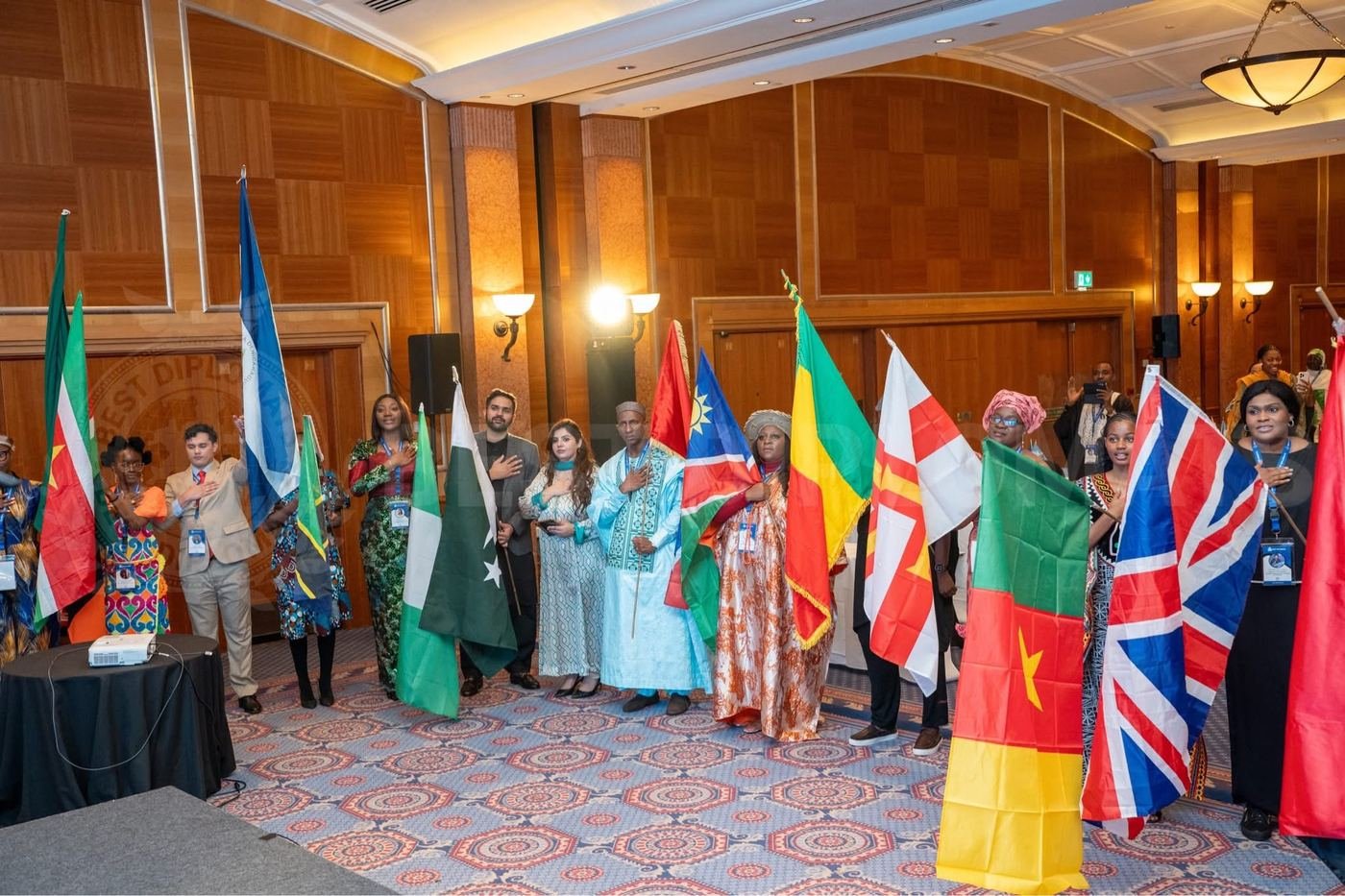
If you are a Pakistani parent reading this, your child has probably come home with a brochure, an Instagram link, or a school announcement about an international Model UN conference. Dubai. Kuala Lumpur. Istanbul. New York. Five days, a hotel, a few hundred delegates from twenty or thirty countries, certificates, photos, and a flight back to Lahore or Karachi. Your child is sixteen, maybe seventeen. They have never travelled abroad without family. The fee is somewhere between PKR 800,000 and 1.5 million all-in.
The hesitation you feel is not paranoia. It is the legitimate caution of a parent who has read too many news stories and who knows perfectly well that the world your child is asking to enter is not the world inside the gate of your home. The questions you have — about safety, about food, about prayer, about who exactly is responsible if anything goes wrong — are the right questions. This guide is written to take them seriously, one at a time, and to help you decide whether you are ready to say yes.
What follows is not a sales pitch. It is the working knowledge that organisers, chaperones, and parents of past delegates accumulate over years of getting Pakistani students to and from international conferences without incident. We have tried to be honest about what works, what to plan for, and what to ask before you pay anyone a single rupee.
Safety: how a properly run delegation actually works
The first thing to understand is that group travel and solo travel are completely different propositions. A solo seventeen-year-old in a foreign city is one risk profile. A delegation of twelve to twenty-five Pakistani students moving as a unit, with a chaperone team that has done this before, is an entirely different one. For a first international trip, the group delegation model is the right answer. There is no version of this where you should send your child solo to a hotel in another country at this age, no matter how mature they are.
From the airport to the hotel
The handover from Pakistani soil to the destination begins at Lahore, Karachi, or Islamabad airport, where the chaperone team typically meets the entire delegation at check-in, supervises immigration, and travels on the same flight. On arrival, the group clears immigration together and is met by either the conference organiser's airport reception desk or by transport that the delegation organiser has pre-booked. Students do not take taxis on their own. There is no scenario in a well-run delegation where a sixteen-year-old is standing alone in the arrivals hall of Dubai International or JFK trying to figure out how to get to the hotel.
Hotel safety and gender separation
Conference hotels are not chosen randomly. International MUN organisers vet their host hotels — typically four-star or five-star international chains with 24-hour front desk, security, CCTV in lobbies and lifts, and key-card access to floors. Delegations stay together on the same floor or adjacent floors. Hotel rooms in PIFIS delegations are gender-segregated by default, with male delegates roomed with male delegates and female delegates with female delegates, regardless of whether the student is over or under 18.
Daily structure inside the hotel includes a morning headcount before transfer to the venue, a return headcount in the evening, and an explicit curfew — generally 10:30 or 11:00 pm — by which all delegates must be back in their rooms. Chaperones do floor walks. There is no scenario where students wander out of the hotel after curfew.
Knowing where your child is
You do not have to guess. Reputable delegations run a parents' WhatsApp group with daily updates — usually a morning check-in, a photo or two from the day, and a confirmation that everyone is back at the hotel by curfew. Your own child should be calling or messaging you at least once a day; most do more, often without prompting. Location-sharing apps work fine on international SIMs once your child has data, and many parents simply share location through WhatsApp or Find My iPhone. None of this is intrusive in the conference context — every Pakistani parent does it.
Conference venue safety
Once at the venue — typically the hotel ballroom complex or a partner university — security is straightforward. Delegates wear conference badges that grant access to committee rooms; non-credentialed adults cannot wander in. Lunches and breaks happen on-site. Students do not leave the venue during conference hours. The only off-site movement is the morning and evening transfer between hotel and venue, and that happens as a group.
If something goes wrong
Every Pakistani parent's worst-case checklist runs through their mind: lost passport, hospitalisation, missed flight, a regional incident. A properly briefed chaperone team has answers for each. The Pakistan embassy or consulate in every common destination — Dubai, Kuala Lumpur, London, Washington, Istanbul, Bangkok — has a 24-hour emergency line for citizens. Travel insurance covers medical evacuation if it ever came to that. The delegation organiser maintains a 24-hour emergency number that parents are given before departure. Lost passports are handled through the embassy with a temporary travel document; it takes 24 to 72 hours and the chaperone shepherds the process.
Halal food: what the city actually offers
This concern is easier to solve than parents often expect. Halal availability depends entirely on the destination, and most popular MUN host cities are well-mapped.
Dubai, Kuala Lumpur, Istanbul
Halal is the default. Conference hotel kitchens in the UAE, Malaysia, and Turkey serve halal meat as standard; you do not need to ask, and you do not need to bring back-up snacks. Lunch boxes provided at the conference venue are halal. Restaurants near the hotel — and there will be many — are overwhelmingly halal. This is one of the reasons these three destinations are the most common starting points for first-time international Pakistani delegates.
Bangkok
Bangkok is more nuanced. Halal options are widely available, especially in Muslim-friendly hotels and at restaurants in areas like Sukhumvit, but it is not the default. PIFIS delegations to Bangkok stay in hotels that serve halal breakfast and arrange halal-certified packed lunches at the venue. Outside of group meals, the chaperone identifies two or three halal restaurants near the hotel for evening meals. Students are advised to confirm "halal" before ordering at any unfamiliar restaurant — pork and non-halal chicken are common in Thai cuisine.
London
London is excellent for halal. The city has thousands of certified halal restaurants, including major chains, and most conference hotels in central London have halal options on their menu or can prepare halal meals on request. Areas around Edgware Road, Whitechapel, and Tooting are dense with options. Conference packed lunches at UK MUNs are usually marked clearly and the delegation lead double-checks.
New York and Boston
Halal in the US Northeast has improved dramatically over the past decade. New York City alone has well over a thousand halal restaurants, and the famous halal food trucks are within walking distance of nearly every Manhattan conference venue. Boston is more limited but still workable, particularly near Harvard Square and Cambridge. The one place to be careful: packed lunches at university-hosted conferences are not always halal by default. The PIFIS chaperone confirms this with the conference organiser in advance and arranges halal alternatives where the default is not.
Practical packing
For any first international trip, we tell parents to send their child with two or three days' worth of ready-to-eat halal snacks — dates, dry fruit, biscuits, instant noodles, a few sachets of chai. The first 24 hours after a long flight are when jet lag, unfamiliarity, and a missed dinner can compound. Having something familiar in the suitcase is a small comfort that costs nothing. After day two, students settle in.
Prayer: how it actually fits into a conference day
A typical international MUN conference day runs roughly 9 am to 6 pm, with a one-hour lunch break and two coffee breaks. Maghrib in particular tends to fall during the afternoon committee session, which is the prayer parents and delegates ask about most often.
What hotels provide
In Muslim-majority destinations, hotels universally provide a prayer mat in the room, a Qibla arrow on the ceiling or inside the wardrobe, and prayer times printed at reception. In Western cities, hotels do not provide these as standard, but apps like Muslim Pro give Qibla direction and prayer times anywhere in the world. Delegates pack a small travel prayer mat — most fold to the size of a paperback.
Prayer space at the venue
University conference venues in the US, UK, and Canada almost always have a multi-faith room or designated prayer space; this is standard at large American universities and most British ones. Hotel ballroom venues in non-Muslim cities will provide an empty meeting room on request. The delegation lead identifies the prayer space on day one and shares the location with the group.
Maghrib and afternoon committee
Most international MUN organisers accommodate prayer breaks if they are requested in advance. PIFIS sends a written request to the conference secretariat before arrival noting that delegates will need a 10–15 minute Maghrib break, and chairs are usually accommodating — many international conferences now have built-in prayer windows after seeing rising Muslim delegate numbers. Where committee schedules are inflexible, delegates pray in the multi-faith room during the next break and combine prayers if necessary, which is permissible while travelling.
Cultural and gender considerations for female delegates
This is the section where parents of daughters often have the most specific questions. We will be direct.
What to wear
Western business attire and modest dress are not in conflict. The standard conference dress code is "business formal" or "Western business" — which translates easily into a long blazer, full-sleeve blouse, full-length trousers or a long skirt, and a hijab or dupatta if your daughter wears one. Many of our female delegates wear hijab through their entire trip, including at the conference podium and during photographs, with no awkwardness. International conferences are religiously diverse spaces; hijab is unremarkable and respected.
Roommate and floor arrangements
Female delegates are roomed with female delegates, two per room as standard. The female chaperone is on the same floor and her room number is shared with all female delegates. Hotel floors are not gender-segregated by floor — that is rare even in conservative destinations — but room assignment is, which is what matters.
Networking dinners and gala nights
Most international MUN conferences include one optional gala dinner on the final or second-to-last evening. These are dressy, lightly formal, and include speeches, awards, and music. At venues that serve alcohol — typical in London, New York, or hotel banquets in Dubai — there is no expectation that any delegate drinks. The bar serves soft drinks and mocktails. Pakistani delegates, along with delegates from other Muslim-majority countries, simply order mocktails or juice. This is universally normal at international conferences and no delegate has ever felt singled out for the choice.
Cultural-night protocols
Some conferences host an optional "cultural night" or "international night" with country-themed performances and dancing. Attending is not required. Many of our female delegates attend the dinner portion, take photos, and skip the dance floor; some attend the whole thing. Some skip the night entirely and hang out in the hotel lobby. All three are fine. The female chaperone is on hand to support whichever choice a delegate is most comfortable with.
Female chaperones
For any PIFIS delegation that includes female delegates under 18, at least one female chaperone is part of the team. Her role is not surveillance — it is support. She handles roommate logistics, accompanies delegates to female-specific spaces, and is the first point of contact for anything a delegate would prefer not to discuss with a male chaperone.
The chaperoning model — what to ask before paying
The chaperone-to-delegate ratio is one of the simplest signals of an organiser's seriousness. PIFIS typically operates at approximately one chaperone per 8–10 delegates, with at least one female chaperone for any group including female students. Smaller delegations may have closer ratios; very large delegations split into pods, each with its own lead.
Chaperones are present at every transition point: airport check-in in Pakistan, immigration clearance, in-flight, airport pickup at the destination, hotel check-in, daily transfers, conference venue, evening curfew, and emergency liaison if anything goes wrong. They are not present in committee rooms during sessions — that is the conference's space — but they are in the venue and reachable.
For schools that prefer it, some PIFIS delegations also include a teacher chaperone option — a teacher from the student's own school travels with the delegation, paid for by the school or split with families. This is increasingly common at Beaconhouse, City School, LGS, and similar institutions, and we are happy to coordinate it during inquiry.
Health: insurance, medication, and the small stuff
Travel insurance is mandatory for every PIFIS delegate and is included in the delegation fee. The policy covers emergency medical treatment, hospitalisation, medical evacuation, and trip cancellation due to medical reasons. Parents receive the policy number and 24-hour assistance line before departure.
If your child takes any prescription medication — for asthma, allergies, anything chronic — pack the original packaging plus a copy of the prescription on the doctor's letterhead. Customs in some destinations checks medication, and originals plus prescription copies clear the question instantly. A small first-aid kit travels with the chaperone team; it covers paracetamol, antihistamines, ORS, plasters, and anti-diarrhoeals. Vaccinations beyond Pakistan's standard schedule are not currently required for any common MUN destination, but check the latest advisories before the trip.
The genuinely common health issues are mundane: jet lag for the first 48 hours, mild stomach upset from unfamiliar food, exhaustion from long committee sessions. Sleep, water, and a quiet evening usually resolve all three. Anything serious goes through the hotel doctor or a hospital, and insurance covers it.
Communication during the trip
Most parents over-buy international roaming and end up with a frustrated student. The simpler approach: at the destination airport, the chaperone helps each delegate pick up a local SIM. In most MUN destinations, a 5-day data SIM costs USD 10–20 and gives plenty of WhatsApp and call data. Pakistani Jazz, Telenor, and Zong roaming packages also work but tend to be more expensive for the same data.
Set expectations with your child before they leave. A daily check-in call or message — morning or evening, your choice — is reasonable. Calling during committee sessions is disruptive, both to your child and to fifty other delegates. The parents' WhatsApp group, which the delegation lead manages, fills in the gaps.
What to expect emotionally
Day one is excitement. Day two is when homesickness occasionally surfaces — a missed home meal, a tired phone call, an "I want to come home" moment. This is normal. It nearly always passes by the end of day two, replaced by friendships with delegates from a dozen other countries that, for many Pakistani students, become the most memorable part of the entire experience. By day five your child has grown in a way that is hard to engineer at home.
The first international trip changes a young person. They come back more independent, more confident speaking in front of strangers, more aware of how their country fits into a wider world. That is the actual return on the investment, and it does not show up on a certificate.
The pre-payment checklist: questions every Pakistani parent should ask
Before paying any deposit, run through this list with the organiser. The answers should be specific, in writing, and consistent.
- Chaperone ratio: How many chaperones for how many delegates? Is at least one female if female delegates are travelling?
- Halal arrangements: What are the breakfast, lunch, and dinner arrangements? Is the conference packed lunch confirmed halal? What is the back-up if not?
- Prayer accommodation: Has the conference been informed about prayer breaks? Is a prayer space identified at the venue?
- Hotel and rooming: What is the host hotel? Are rooms gender-segregated? How many delegates per room?
- Curfew and supervision: What is the daily schedule and curfew? How is the headcount conducted?
- Emergency protocol: What is the 24-hour emergency line? Who is the embassy contact? What insurance is included and what is the policy number?
- Visa support: What documents does the organiser provide for the visa application, and what is the timeline?
- Refund policy: If the visa is denied, what portion of the fee is refundable? If your child falls ill before departure, what is covered?
For more on the financial side of this decision, see our breakdown of the real cost of international MUN for Pakistani families. For the visa-specific process — easily the most stressful pre-trip variable — read our visa guide for Pakistani students attending MUN conferences. And if you are still deciding which conference is the right first trip, our pick of the 7 best international MUN conferences for Pakistani students in 2026 has the format, dates, and difficulty level for each.
Frequently asked questions
Will my child be supervised the entire time?
Yes. With a reputable Pakistani delegation organiser, students are supervised from the moment they land at the destination airport until they depart. Chaperones handle airport pickup, hotel check-in, daily transfers to the conference venue, end-of-day headcounts, and an evening curfew. Free time inside the hotel is permitted, but there is no unsupervised wandering in unfamiliar cities. PIFIS typically maintains roughly one chaperone for every 8–10 delegates, with at least one female chaperone present whenever the delegation includes female students under 18.
What if my daughter prefers female-only roommates?
Hotel rooms are gender-segregated by default for all delegates under 18, and the same separation is maintained for delegates over 18. Female delegates are roomed with other female delegates, typically two to a room. If a parent has a specific roommate request — for example, a school friend travelling on the same delegation — communicate it during inquiry and we accommodate it where possible.
Is alcohol served at international MUN conferences?
Some optional evening events — gala dinners or networking receptions in cities like London, New York, or Dubai — may have alcohol available at the bar for adult delegates from other countries. There is no expectation that any delegate drinks. Soft drinks, juices, and mocktails are always provided. Pakistani delegates and chaperones routinely opt for non-alcoholic options without any social awkwardness; this is normal at international conferences with mixed audiences.
Can my child fast (Ramadan) during a conference trip?
Yes. Sehri and iftar arrangements are made at the hotel when delegations travel during Ramadan, and hotel kitchens in Muslim-majority destinations like Dubai, Kuala Lumpur, and Istanbul accommodate this as standard. In non-Muslim-majority cities, the chaperone team arranges hotel-room iftar boxes or coordinates with nearby halal restaurants. Conference organisers are notified in advance so committee scheduling does not conflict with iftar timings where possible.
What if there is a medical emergency?
Every PIFIS delegate is enrolled in international travel insurance that covers emergency medical treatment, hospitalisation, and medical evacuation if required. The chaperone team carries a basic medical kit, has the emergency contact details of the nearest Pakistan embassy or consulate, and operates a 24-hour emergency line that parents are given before departure. For minor issues — jet lag, mild stomach upset, a fever — the chaperone arranges hotel-doctor visits or pharmacy runs.
Can a parent travel along?
Yes — parents are welcome to travel to the same destination independently and stay at the conference hotel as a paying guest where rooms are available, particularly for first-time travellers. The delegate, however, remains in the chaperoned group for all conference activities — meals, transfers, and committee sessions — because that is the structure conference organisers expect. Many parents find that travelling along for the first trip and stepping back for subsequent ones is a comfortable middle ground.
Still weighing it up? Talk to us first.
The pre-payment checklist above is the right place to start. If you'd like to walk through the answers for a specific PIFIS delegation — including Youth Impacts 2026 — we are happy to take the call.
Get in touch